Some thoughts on the stories brewing at the start of the New Year.
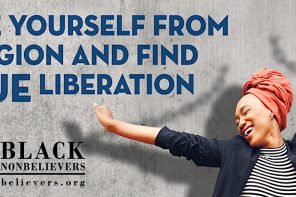
After endless boring reports about atheist eliterati like Sam Harris, Christopher Hitchens and Daniel Dennett, I was delighted to read that non-believers are taking it to the streets. Literally. The first ever atheist ad campaign in Britain was launched this fall, and the fundraising went so well that this month the campaign plastered signs on some 200 London buses. Plus another 600 buses will carry the “There’s probably no God, now stop worrying and enjoy your life” message throughout England, Wales and Scotland.
According to the Telegraph: “Ariane Sherine, a writer who first thought of the atheist bus adverts, said: ‘You wait for ages for an atheist bus, then 800 come along at once. I hope they will brighten people’s days and make them smile on their way to work.'”
So will it be a year of smiles for the faithless—or, perhaps, the faithful? A lot depends on the economy. Religion didn’t fare particularly well during the Great Depression. Despite the seeming need for alternative realities, church attendance didn’t swell in the 1930s. At the end of last year, though, some evangelical churches said attendance was growing, and many pastors spoke of the need for spiritual affirmations amidst the financial freefall.
I’m watching this story because Americans’ religious response to the economy says a lot about the nature of belief, creed and community in this country. Ever since the Puritans landed, Americans have found novel ways to sanctify getting and spending—notwithstanding what the Bible has to say about rich men, camels and the eyes of needles. We’ve also had an ambivalent attitude toward those in need, never sure whether they’re blessed or cursed, saints or sinners.
How churches square biblical teachings, American values and new economic realities will say a lot about the present changes and emergent trends. I’d start by looking into what’s being preached and what’s being practiced. Where are resources directed and who is deemed worthy of help? What questions are believers asking and what answers are religious leaders offering? Bottom line: How, what and why will individual and corporate religious commitments shift vis-à-vis social concerns, political issues, and moral stands when less really is less—and more is not an option.
I wonder, too, who will be smiling (more or less) when the smoke clears from Gaza. As important as covering who’s winning and why, Americans need reporting on how religious communities here—be they Jewish, Muslim or Christian—respond when religious entanglements become politicized and political entanglements become sacralized. I’d like to read a story about American Jews who love Israel but question Israeli policy (and who aren’t savaged by other Jews for their opinions). Or what about one on American Christians who view Israel as something other than (1) a pariah state, (2) a mission field, or (3) the backdrop for Armageddon. Or maybe on American Muslims and Jews modeling new relationships?
How to find these stories? I’d look for chinks in religious, philanthropic and communal groups: new ways of looking at longstanding problems, young leaders offering alternative visions, and philanthropists supporting new models. These stories need to be teased out online or pursued on the ground—venues far from the politicos, pundits and PACs that have dominated the discourse for far too long.
And this is just a start; there’s much more: whither Rick Warren, Anglican schism, gay unions and—last but hardly least, the Obamas on Sunday mornings? But before succumbing to the pursuit of the obvious, let’s not forget the stories beneath, behind, above and below what we’re seeing on economic and political fronts. That’s what good reporters always do—and covering religion in 2009 will demand nothing less.